
Standby and whole house generators
What is a whole house generator
The short answer
What is a whole house generator? A whole house generator is a permanently installed standby unit. A transfer switch connects it to the home. Automatic starting depends on the exact switch ordered. Fuel type, voltage and load management decide what can run at once.
Last updated October 2026
What's covered7
A whole house generator is a standby unit installed at a home. It connects to the electrical system through transfer equipment. This guide explains how it works, where it falls short, and which smaller options exist.
A whole house generator is a permanently installed standby unit that feeds a home through a transfer switch. With a matching automatic transfer switch, it can start and take over during an outage. Its rating depends on fuel type. A rating does not mean every appliance can run at the same time. Load management can help.
| Option | Example from maker data | Output | Key limit |
|---|---|---|---|
| Standby generator | Generac Guardian 26 kW | 26 kW LP, 22.5 kW NG, 240 V | Needs licensed install |
| Standby generator | KOHLER 20RCA | 20 kW LP, 18 kW NG | ATS sold separately |
| Partial manual switch | Reliance 306CRK | Six circuits, 30 A | Manual, partial coverage |
| Battery station | BLUETTI AC200L | 2,400 W, 2,048 Wh, 120 V | Fixed stored energy |
Scroll for more →
What a whole house generator is
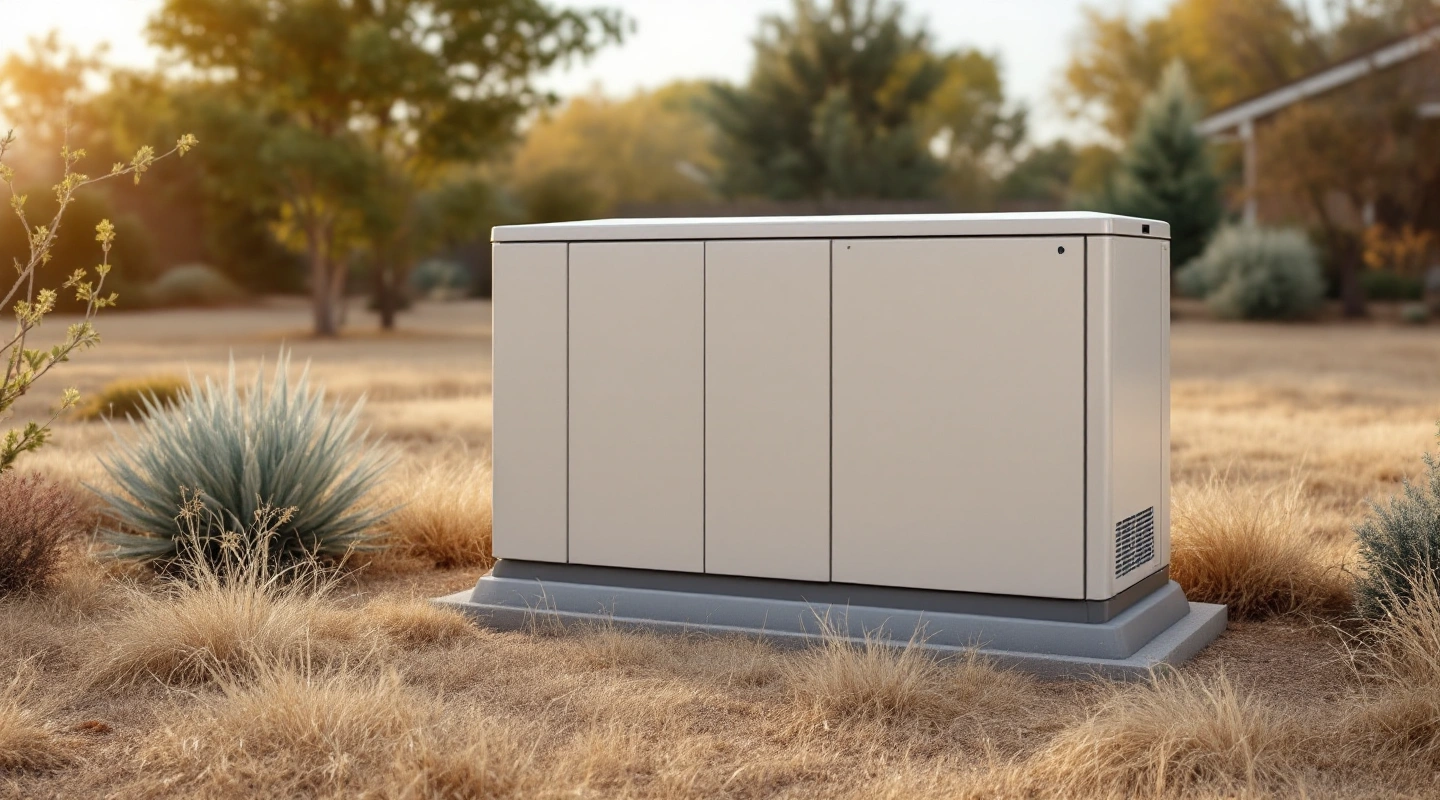
A standby generator stays in place outside the home. It uses a fixed fuel supply, usually natural gas or propane. Exact clearances come from its manual and local rules.
Fuel changes output on the same model. Generac lists its 26 kW Guardian at 26 kW on propane. The same unit makes 22.5 kW on natural gas. Cummins rates its RS20A at 20 kW on propane and 18 kW on natural gas.
Generac lists rated voltage of 240 V. Cummins lists 120/240 V single phase.
Transfer switches and load management
Transfer equipment keeps utility and generator power apart. Generac says the generator, switch, inlet, panel and circuits must match. Licensed trades handle installation under local code. An adapter cannot create a voltage the generator does not make.
Automatic starting needs an automatic transfer switch built for that system. KOHLER lists its switch as a separate option on the 20RCA. Order documents must confirm the exact setup.
Load management limits which circuits run when demand is high. Which circuits get priority is a choice for each home.
How to think about startup power
Motors can draw extra power when they start. Add all running watts at once first. Then add the largest extra starting gap. If motors may start together, add each extra gap.
Use nameplate data, not guesses.
Watts measure power. Watt-hours measure stored energy. Volt-amps equal watts only when power factor is known.
Smaller setups and other backups
Some homes back up only key circuits. The Reliance TF152W handles one 125 V, 15 A circuit. The 306CRK kit covers six circuits at 30 A. Kit contents do not prove fit with a given home.
Portable engine generators must run outdoors. CPSC says keep them at least 20 feet from homes. Point exhaust away. Never run one indoors or in a garage, even with doors open.
Battery stations avoid combustion, but their watt-hours run out.
For upkeep, read home generator maintenance.
Sources, method and limits
We used maker spec sheets, CPSC guidance and Department of Energy unit rules. Generac lists $8,000 to $16,000 as an indicative US total, including installation. That is maker guidance, not a quote. Site, fuel line and permits change real costs.
What is a whole house generator FAQs
How does it differ from a portable generator?
A standby unit stays installed and uses fixed fuel. A portable unit is moved into place for each outage. Portable engines must run outdoors at least 20 feet from homes, with exhaust pointed away. Both need proper transfer equipment installed by licensed trades.
Will it run every appliance at once?
Not always. The rating is a limit, and it changes with fuel. Add the running watts of everything that runs together, then add starting gaps. Load management can shed lower priority circuits when total demand gets close to that rating.
Does it always start by itself?
Only with a matching automatic transfer switch. Some makers sell the switch separately. KOHLER lists it as an option for the 20RCA. Check the exact order papers and installation documents before you expect automatic operation during an outage.
What does it cost?
Generac publishes an indicative US range of $8,000 to $16,000. It covers the generator, system parts and installation. This is maker guidance, not an independent average. Your location, fuel line, site work and permits can change the final total.
Primary documents
- CPSC portable engine generator placement
- BLUETTI AC200L exact US specifications
- Generac Guardian 26 kW specification sheet
- KOHLER 20RCA current specification
- Cummins QuietConnect current home-standby brochure
- Reliance Controls six-circuit transfer kit
- Reliance Controls TF152W single-circuit transfer
- Generac published complete installation budget
- Power and energy units
- Generac home connection safety
- BLUETTI AC200L cycle/storage record
- Generac G007290-0/G007291-0 published fuel consumption
What is a whole house generator Verdict
What is a whole house generator? A whole house generator suits homes wanting installed backup for many circuits. Confirm fuel rating, voltage, switch type and load plan with licensed trades. If only a few circuits matter, a partial manual switch may fit better.