
Generator purchase costs
Whole house generator cost
The short answer
Whole house generator cost: Generac's $8,000 to $16,000 US range is manufacturer guidance, not a quote. Your total depends on the exact equipment, transfer gear, panel work, fuel work, site needs and permits. Compare written quotes line by line. Choose a size only after a load review that uses real running and starting figures.
Last updated October 2026
What's covered12
- Whole house generator cost at a glance
- What the published whole house generator cost range covers
- Equipment: standby generator ratings
- Transfer equipment and the panel
- Site preparation and electrical work
- Fuel work and fuel ratings
- How starting loads affect sizing
- Portable and battery options are a separate budget
- Whole house generator cost: compare the same project
- Sources, method and limitations
- Whole house generator cost FAQs
- Whole house generator cost Verdict
A whole house standby system is a project, not one product. The final bill combines equipment, transfer gear, site work, wiring and fuel work. Each part can change on its own. This guide separates those parts.
It shows which figures come from published documents and which must come from your quote.
What does a whole house generator cost? Generac publishes an indicative US total of $8,000 to $16,000. That range includes the generator, system equipment and materials, and installation. It is manufacturer guidance, not a quote or a national median. The page shows no publication date. Location, fuel line, site and permit scope change the real total.
Whole house generator cost at a glance
| Cost part | What it covers | Published detail here | What changes it |
|---|---|---|---|
| Complete package | Generator, system equipment, materials, installation | Generac: $8,000 to $16,000, US, undated | Location, fuel line, site, permits |
| Generator | The standby unit | Ratings only, no unit price | Size, fuel, voltage configuration |
| Transfer equipment | Gear that isolates utility and generator power | Component specs only, no price | Panel, circuits, local rules |
| Site preparation | The unit's location and base | No published figure | Unit manual, local rules, site |
| Electrical work | Wiring between generator, switch and panel | No published figure | Panel condition, distance, permits |
| Fuel work | Gas supply to the unit | No published figure | Existing service, pressure, flow |
Scroll for more →
What the published whole house generator cost range covers
Generac's installation page gives the only complete package range in this guide. It lists $8,000 to $16,000 for a US project. The total includes the generator, system equipment and materials, and installation. The page shows no publication date.
This range comes from a company that sells generators. It is not an independent survey. It is not a median, and it is not a quote. Generac itself says location, fuel line, site and permit scope change the actual total.
No source here gives a separate price for each part. So this guide does not invent splits. A dollar figure for a base, wiring or gas work needs a written local quote. The useful step is to ask each installer for line items.
Then you can compare the same parts across quotes.
To test scenarios, try our whole house generator cost calculator. It lets you change size, fuel and scope. For brand-specific questions, see the Generac generator cost guide. Treat any estimate as a planning number, not a site result.
Equipment: standby generator ratings
Standby generators are rated in kilowatts. A kilowatt is 1,000 watts. That rating describes power. It is not stored energy, which is measured in kilowatt-hours.
Three published standby ratings frame size choices here:
- Generac Guardian 26 kW (G007290-0, G007291-0): 26 kW maximum continuous on liquid propane, 22.5 kW on natural gas, rated 240 V.
- KOHLER 20RCA: rated 20 kW on LP and 18 kW on natural gas, with a US single-phase 120/240 V option.
- Cummins QuietConnect RS20A: 20 kW on LP and 18 kW on natural gas, 120/240 V single phase, per the current brochure.
For these three models, the natural gas rating is lower than the propane rating. That matters for planning. If a home will use natural gas, the lower number is the one to plan around for these units. We do not extend that pattern to other models.
Cummins' brochure rates the unit in kW. Kilowatts and kilovolt-amps can only be compared when the power factor is known.
A rating is not a fit result. It does not show that a named appliance will start or run. That proof needs the appliance's running watts, starting watts, voltage, connection and run time. KOHLER and Cummins both say their documents must confirm the exact order configuration.
Transfer equipment and the panel
Transfer equipment keeps the home isolated from the utility while generator power is in use. Generac's support guidance says the generator, switch, inlet, panel and circuit design must match. Installation and service belong to licensed electrical trades.
KOHLER lists an automatic transfer switch as sold separately on a listed 20RCA option. So a generator price may not include the switch. Check that each quote names the switch model.
Manual kits show how transfer gear changes with circuit count:
- Reliance Controls 306CRK: six circuits, 30 A, with a 306C switch, PB30 inlet and PC3010 ten-foot cord.
- Generac HomeLink 6853: a 30 A pre-wired manual transfer switch kit. Generac says an upgrade may be possible, subject to system requirements.
- Reliance Controls TF152W: one circuit, 125 V, 15 A, NEMA 5-15 inlet, for a single furnace-type circuit. It lists 1,875 maximum generator running watts.
These facts identify kit contents and ratings. They do not prove a kit suits your panel. The TF152W's 125 V rating describes that part, not every appliance in a home.
An interlock must be listed and accepted for your exact panel and local rules. An adapter cannot create a voltage the generator does not supply. CPSC warns never to backfeed through a wall outlet. Panel, neutral and gas changes are work for licensed trades only.
Site preparation and electrical work
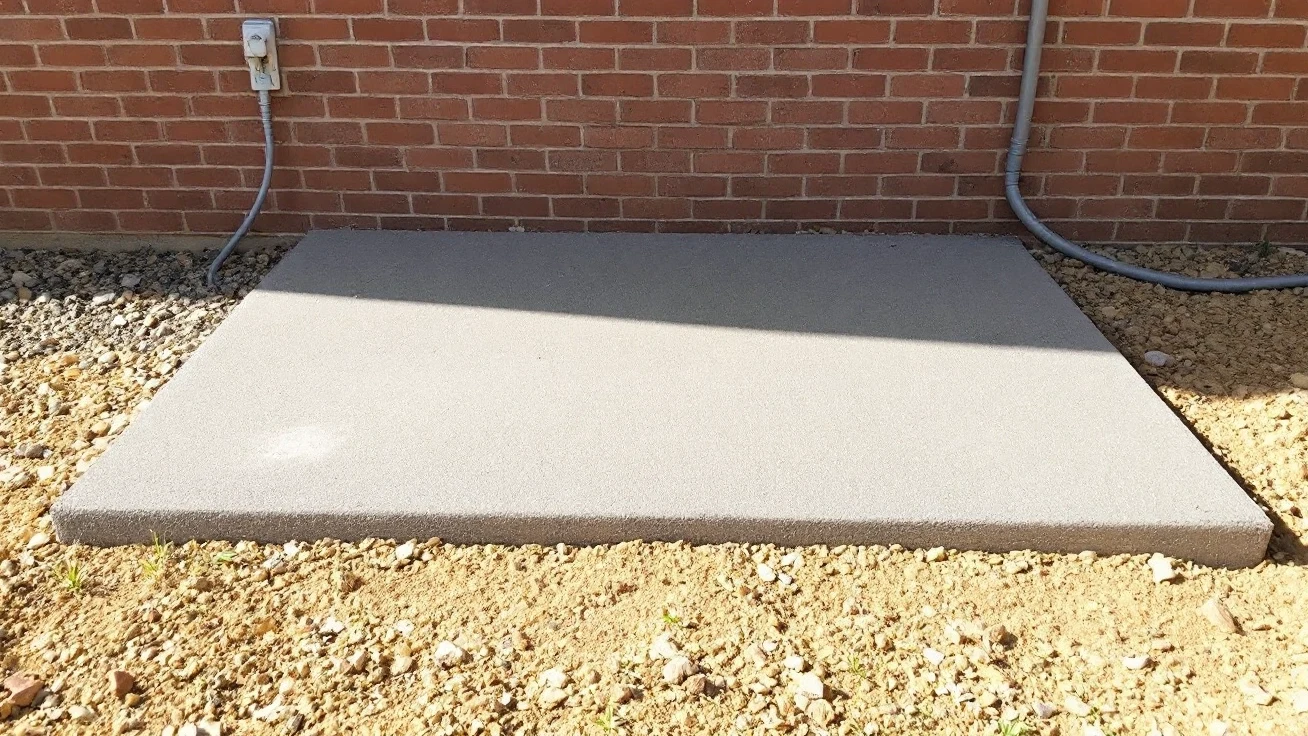
Site preparation readies the generator's location. No source in this guide gives a dollar figure for it. The base type and clearances come from the unit's own installation manual and local rules. We do not assume every model needs the same base.
Electrical work links the generator, transfer equipment and panel. Its scope depends on panel condition, space and distance between parts. If the panel cannot accept the planned equipment, the quote may add panel work. That work is separate from the generator price.
Permits and inspections follow local rules. Their fees and timing vary by area. Ask each installer whether permits are included.
When you compare quotes, look for these lines:
- equipment model and fuel rating
- transfer equipment model and circuit scope
- site preparation and base
- electrical labor and materials
- fuel work
- permits and inspections
Fuel work and fuel ratings
Fuel work connects the generator to its fuel supply. Each standby model above lists ratings for natural gas and liquid propane. Your available fuel shapes both the usable rating and the work needed.
Gas supply is a separate check from electric output. You cannot work out gas flow from watts. Fuel pressure, flow, pipe sizing and the unit's exact instructions must be confirmed by a licensed gas professional. Source voltage is its own check on the electrical side.
An existing natural gas service may still need work. It must meet the generator's documented pressure and flow. If propane is planned, the supply setup is a site-specific design item. Neither fuel is shown here to be endless or guaranteed.
Some portable models also list several fuels. Their figures show how fuel changes output on specific units:
- Westinghouse WGen11500TFc: 11,500 W running on gasoline, 10,500 W on propane, 9,500 W on natural gas, 120/240 V.
- DuroMax XP13000HXT: 10,500 W running on gasoline, 10,000 W on propane, 9,000 W on natural gas, 120/240 V per its product table.
- Champion 201176: 7,250 W running on gasoline, 6,525 W on propane, 5,875 W on natural gas, 120/240 V.
Match your unit's label and manual revision before sizing loads. Starting watts do not promise a motor will start or state how long peak output lasts.
These are portable units, not whole house standby systems. Gasoline availability during an outage varies by area.
How starting loads affect sizing
Sizing talks often focus on motor starts. A motor can draw more power for a moment than while running. A clear formula keeps the same motor from being counted twice.
Let R be the total running watts of everything on at once. If only one motor starts at a time, find each motor's starting watts minus its running watts. Add the largest gap to R. The result is the starting need, S.
If motors can start together, add the gaps for all of them to R. Count each motor once for each start. Treat any negative gap as zero. Do not add a full starting value on top of R, because R already holds that motor's running watts.
Do not assume motors never start together. Use real figures from each appliance's label or documents. Watts and volt-amps differ unless power factor is known. The installer then checks the result against the exact circuit list.
Portable and battery options are a separate budget
Portable generators and battery stations are not a whole house standby install. Some households compare them anyway, so the key limits matter.
CPSC says portable engines run outdoors only, at least 20 feet from the home, with exhaust pointed away. Never run one in a home or garage, even with doors open. Keep it on a dry surface. Shut it down and let it cool before refueling.
Use CO alarms, and get to fresh air if one sounds.
Published portable specs show a smaller scale:
- Honda EU2200i: 1,800 W rated, 2,200 W maximum, 120 V.
- Honda EU3200i: 2,600 W rated, 3,200 W maximum, 120 V.
- Honda EU3000iS: 2,800 W rated, 3,000 W maximum, 120 V, with electric start.
- Champion 201278: 3,500 W running on gasoline, 3,150 W on propane, 120 V.
- Westinghouse iGen2550DFc: 1,900 W running on gasoline, 120 V. Its page says it is not transfer-switch-ready.
Westinghouse's WGen11500TFc page describes pairing with its WATS200 automatic transfer system. This guide has not reviewed that system's full requirements. So we do not judge automatic operation here. Any engine unit still needs safe outdoor placement.
When pricing a battery alternative, budget for stored energy and the way you will recharge it. Extra battery packs and solar panels can change the total. Compare a complete usable package with the fuel system's complete installed scope. A low entry price may cover only the station, while the outage plan needs more energy or charging equipment.
Follow each model's own instructions for use and charging.
Whole house generator cost: compare the same project
Separate equipment reference from installed price
One catalog example shows why scope matters. Generac's US G0072910 listing starts at $7,899.00 MSRP. The listing includes a whole-house switch and WiFi. It is not a generator-only price or an installed quote.
A different model code can mean a different package.
Use that figure to identify what a seller is describing. Do not turn it into a national equipment average. Do not subtract it from a broad installed range to invent labor. The figures come from different scopes.
A local quote must state the actual parts and work for your home.
Keep the backed-up circuit list unchanged
Give each installer the same proposed load list. Record which circuits matter most during an outage. Mark any load that may be left off. Keep those choices with the quote.
They help explain whether two prices describe the same backup task.
Check the proposed model's output on your chosen fuel. A propane rating is not the natural-gas rating. Then check the switch and any load controls in the order. Ask which parts are included in the price.
Confirming those parts is a design task for the licensed installer.
Compare the site scope too. One quote may include a new fuel route. Another may assume an existing route can be used. Ask which assumption each one makes.
Existing equipment does not prove it fits a new unit. Leave reuse unresolved until the exact documents and installer confirm it.
Keep exclusions beside the estimate
Write an exclusion list before choosing the lower total. Note any unpriced permit or utility work. Note tax only when its basis is supplied. Keep delivery and later service separate if the source excludes them.
A named unknown is more useful than an assumed zero.
The cost worksheet can store those lines while the page is open. Use one package total or separate non-overlapping lines. A source that bundles work should not be split by guesswork. Save the quote's scope and check date with the result.
The printed record is a budget comparison, not a design approval.
Finally, match the quote to the order before paying. Recheck the model code, switch and chosen fuel. Ask about any changed scope in writing. A price change may reflect changed parts or work.
The headline total alone cannot explain that difference.
Sources, method and limitations
Sources and dates
Every figure here comes from a manufacturer document or a CPSC page. Generac's cost page shows no publication date.
Method
We used one complete package range and labeled it as maker guidance. Component specs stay apart from price. We used the Cummins brochure for its ratings.
Limitations
The primary documents here do not price individual parts by region. No source gives a national median. Ratings are not compatibility results. Final fit depends on the order configuration, panel, fuel supply, local rules and licensed installation.
Whole house generator cost FAQs
What does the published range include?
Generac's indicative US range of $8,000 to $16,000 includes the generator, system equipment and materials, and installation. It is manufacturer guidance, not a quote. Location, fuel line, site and permit scope can move a real project outside that range.
Is the transfer switch always in the generator price?
No. KOHLER lists an automatic transfer switch as sold separately on a listed 20RCA option. Read each quote for a named switch model and its circuit scope. The generator, switch, inlet, panel and circuits must match.
Licensed electricians handle that installation.
Does fuel type change the output?
For the three standby models here, yes. Generac's 26 kW unit lists 22.5 kW on natural gas. KOHLER 20RCA and Cummins RS20A list 18 kW on natural gas and 20 kW on propane. Check your exact model's sheet before planning loads.
Why do two quotes differ for the same model?
Quotes can differ in scope. One may include transfer gear, panel work, fuel work or permits while another leaves them out. Site conditions and local rules also change labor. Ask each installer to list equipment, transfer gear, site, electrical, fuel and permits separately.
Primary documents
- CPSC portable engine generator placement
- Honda EU2200i exact US specifications
- Honda EU3200i exact US specifications
- Honda EU3000iS exact US specifications
- Champion 201176 operator's manual specifications
- Westinghouse iGen2550DFc exact US specifications
- BLUETTI AC200L exact US specifications
- Jackery Explorer 2000 v2 exact US specifications
- Generac Guardian 26 kW specification sheet
- Westinghouse WGen11500TFc US product specification
- DuroMax XP13000HXT current US specification
- EcoFlow RIVER 2 Pro US 768 Wh model
- KOHLER 20RCA current specification
- Cummins QuietConnect current home-standby brochure
- Reliance Controls six-circuit transfer kit
- Generac HomeLink manual transfer kit
- Reliance Controls TF152W single-circuit transfer
- Champion 201278 dual-fuel inverter
- Generac published complete installation budget
- CPSC generator dry-surface and refueling safety
- Power and energy units
- Generac home connection safety
- BLUETTI AC200L cycle/storage record
- Jackery Explorer 2000 v2 cycle record
- EcoFlow RIVER 2 Pro cycle/storage record
- Generac G007290-0/G007291-0 published fuel consumption
- Generac G0072910 current US catalog package reference
Whole house generator cost Verdict
Whole house generator cost: Use Generac's $8,000 to $16,000 range as a reference point, not a price for your home. If your panel can accept the planned transfer gear and your fuel supply meets the unit's documented needs, your scope may be simpler. If you need panel work, new fuel work or extra site preparation, expect more line items. In every case, compare quotes line by line.
Pick a size only after a load review with real running and starting figures. For wider backup options, see our best generator for home guide.
Continue your backup plan
Compare the backup options
With your load and cost limits in hand, compare home backup options. Match the listed limits to your figures before choosing a model or planning an installation.