
Transfer switches and installation
What is an automatic transfer switch
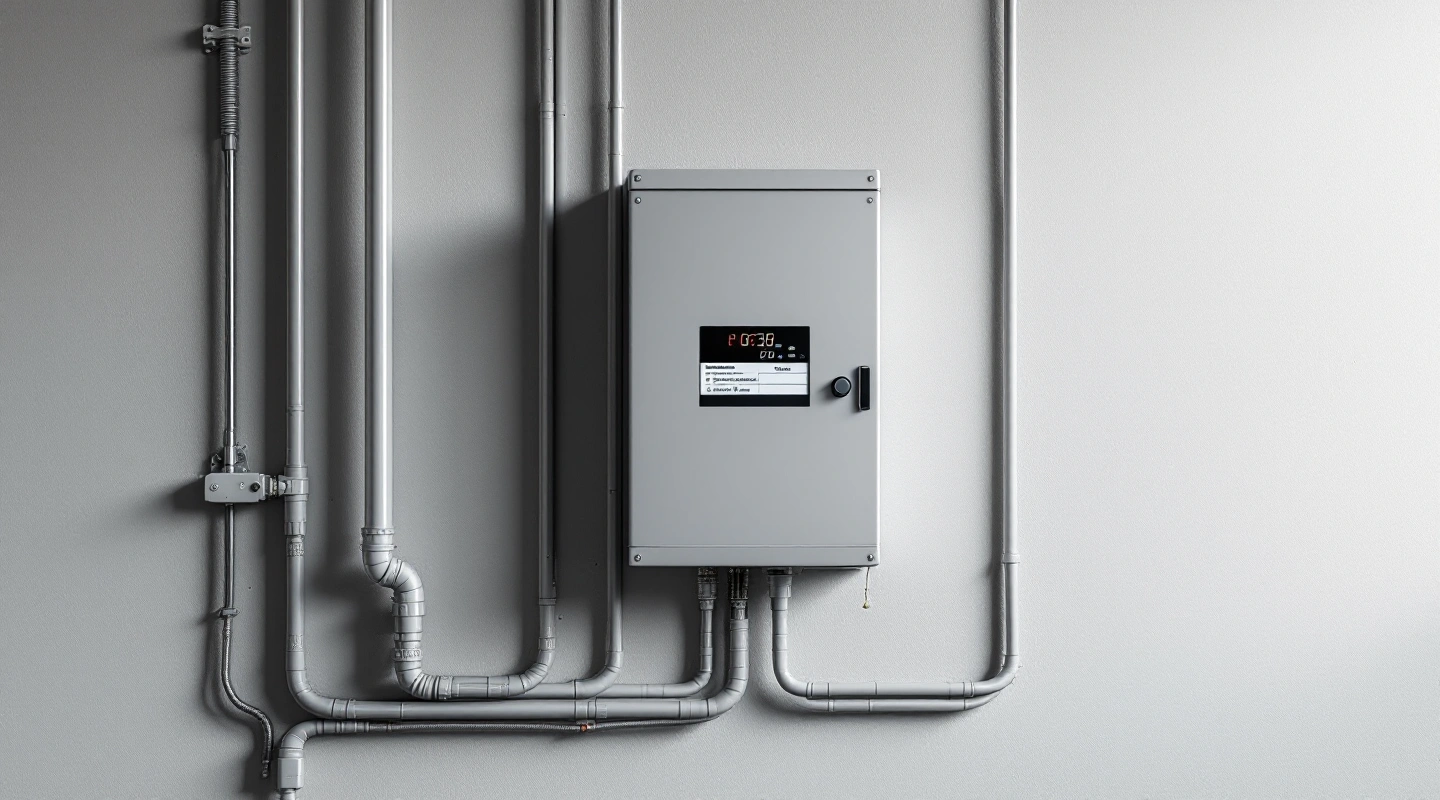
The short answer
What is an automatic transfer switch? It is a control and switching device for a backup system. In concept, it senses an outage. It signals a matched generator, moves load, then moves it back. Timing, fit and load control depend on the exact switch and generator papers.
Last updated October 2026
What's covered6
Backup power raises a basic question. How does a home move from grid power to a generator? A transfer switch keeps those two sources apart. An automatic version makes that change without a person flipping a handle.
An automatic transfer switch changes a home's power source by itself. In concept, it senses a grid outage. It signals a matched generator to start, then moves the selected load to that generator. When grid power returns, it moves the load back. Exact timing and features come only from that switch's own papers.
| Option | Who changes the source | What it feeds | What to confirm |
|---|---|---|---|
| Automatic transfer switch | The switch control | Circuits wired to it | Paired generator, voltage, amperage, timing |
| Manual transfer switch | A person | Selected circuits | Inlet, cord, generator output, panel |
| Battery power station | Depends on the unit | Devices or approved connection | Any automatic switching in its own manual |
Scroll for more →
How an automatic transfer switch works
The switch watches the grid supply. When it judges that supply has failed, it sends a start signal. The signal goes to a generator built to accept one. It then waits for usable generator output.
Only then does it transfer.
Retransfer is the reverse step. The switch confirms grid power is back. It moves the load and lets the generator stop. Delay settings differ by product.
Read the paired manual for real figures.
Some systems add load management. It can limit which circuits run at once. Check the exact papers. Confirm whether this is built in or sold separately.
What is an automatic transfer switch compared with battery backup?
A battery power station stores energy, measured in watt-hours. Its output is power, measured in watts. The BLUETTI AC200L lists 2,048 Wh and 2,400 W rated output. The Jackery Explorer 2000 v2 lists 2,042 Wh and 2,200 W.
Those figures do not show switching style. They also do not show panel fit. A panel-level switch is a separate device with its own rules.
Generators vary too. The KOHLER 20RCA standby page lists an automatic transfer switch sold separately as a listed option. The Westinghouse WGen11500TFc page describes pairing with its WATS200 system. This page does not compare that system's full needs.
Safety and installation limits
Automatic operation does not change exhaust rules. CPSC says portable engine generators belong outdoors. Keep them at least 20 feet from homes, with exhaust pointed away. Never run one indoors or in a garage, even with doors open.
Standby clearances come from the unit's manual and local rules.
Generator, switch, inlet, panel and circuits must match. Install and service belong to licensed electricians. An adapter cannot create a missing output voltage.
Sources, method and limits
We used maker and CPSC papers. None gave consumer transfer timing, so this page gives none.
FAQs
Does the switch start the generator?
It can send a start signal when the generator is designed to accept one. The generator's own controls do the starting. Whether a given pair works together depends on exact papers for both products. A switch from one brand should not be assumed to control another brand's unit.
Can a power station replace an automatic transfer switch?
Not by default. A power station stores energy and delivers rated output. Any automatic switching it offers must appear in its own manual. A panel connection still needs matching, approved gear and licensed install.
Watt-hour capacity does not tell you how many watts it can deliver.
How is retransfer different from transfer?
Transfer moves load from failed grid power to the generator. Retransfer moves it back once grid power returns. Each step may use its own delay settings. Those settings vary by product.
Read the paired switch manual for real numbers. Do not borrow another model's figures.
Is an automatic switch the same as a manual one?
No. A manual switch needs a person to operate it during an outage. An automatic switch changes sources through its own controls. Both must match the generator, voltage, amp rating and panel.
Both also need install by licensed electricians who follow product instructions and local codes.
Primary documents
- CPSC portable engine generator placement
- BLUETTI AC200L exact US specifications
- Jackery Explorer 2000 v2 exact US specifications
- Westinghouse WGen11500TFc US product specification
- KOHLER 20RCA current specification
- Power and energy units
- Generac home connection safety
- BLUETTI AC200L cycle/storage record
- Jackery Explorer 2000 v2 cycle record
What Is an Automatic Transfer Switch Verdict
What is an automatic transfer switch? It is the part of a backup system that changes power sources by itself. Choose one only when switch, generator and panel papers agree. If they do not, the automatic function stays unconfirmed.
For the broader topic, read what is a generator transfer switch.